Dieffenbachia seguine (Dumbcane) Plant Features and Care Guide
Dieffenbachia seguine, commonly known as Dumb Cane, is a striking tropical plant celebrated for its broad, beautifully patterned leaves. A staple in the houseplant community, it instantly adds a lush, jungle-like ambiance to indoor spaces. While it demands a bit of respect due to its toxicity, its robust growth and air-purifying qualities make it a highly rewarding companion for plant lovers.
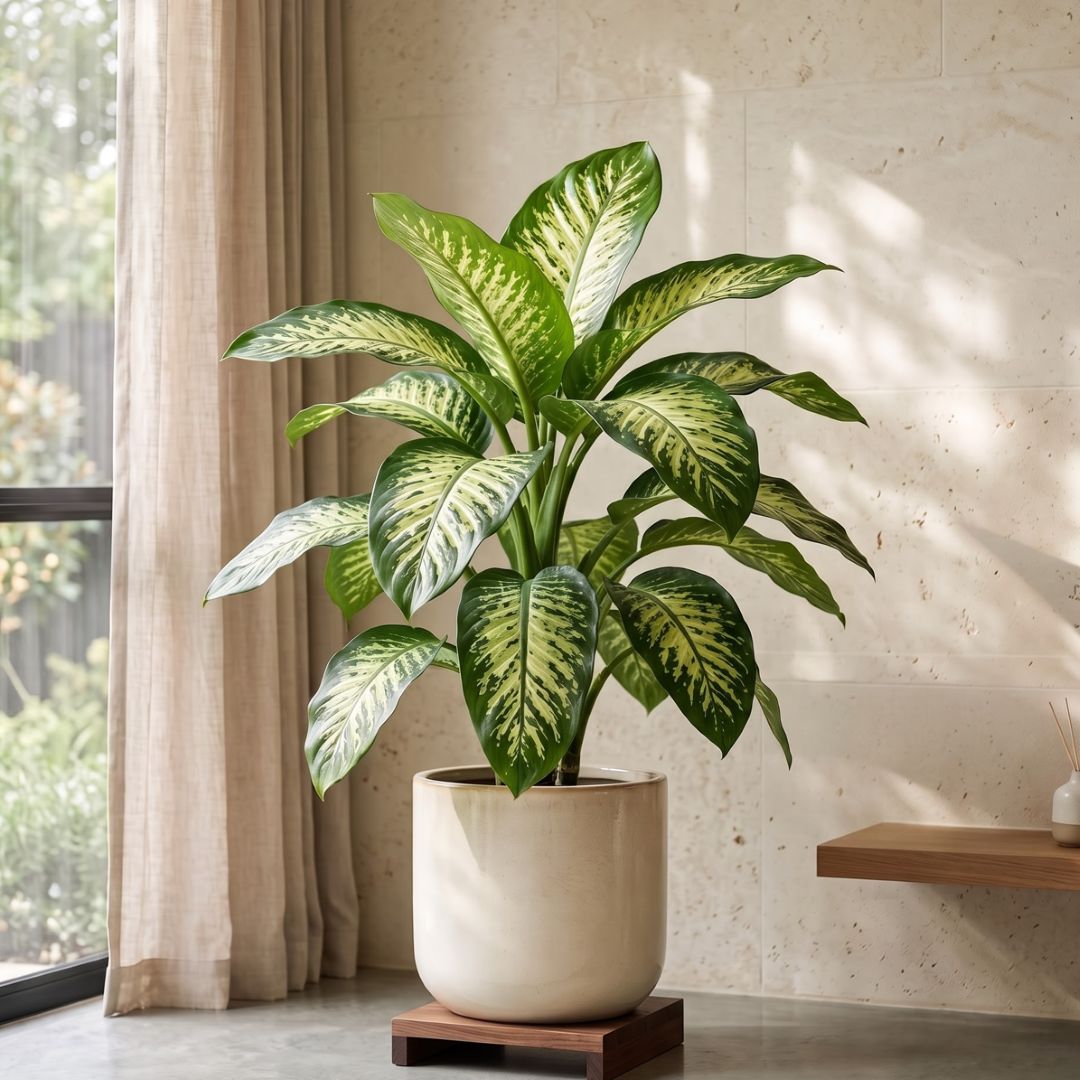
Dieffenbachia seguine (Dumbcane) Overview
Dieffenbachia seguine is a herbaceous perennial that boasts massive, ovate leaves. These spectacular leaves emerge from a thick, central cane-like stem and are heavily variegated with splashes of cream, white, or pale yellow, framed by dark green margins.
As the plant matures, the lower leaves naturally drop to reveal a striking, textured trunk. Indoors, they typically reach a comfortable 3 to 5 feet, creating a bold architectural statement piece that commands attention in any brightly lit room.
Key Features of Dieffenbachia seguine
| Feature | Details |
|---|---|
| Botanical Name | Dieffenbachia seguin |
| Common Names | Dumb Cane, Leopard Lily, Tuftroot |
| Plant Type | Tropical herbaceous perennial |
| Mature Size | 3 to 10 feet tall outdoors; 3 to 5 feet indoors |
| Growth Habit | Upright, bushy |
| Growth Rate | Fast (under optimal conditions) |
| Leaf Appearance | Large, broad, ovate leaves with cream/yellow and green variegation |
| Toxicity | Highly toxic to humans, cats, and dogs |
Care Guide
Despite its exotic appearance, Dieffenbachia seguine is surprisingly adaptable. By mimicking its native tropical environment—providing warmth, filtered light, and consistent moisture without waterlogging the roots—you can easily keep this plant thriving year-round.

Light Requirement & Placement
Dumb Canes flourish in bright, indirect sunlight. Place your plant near an east- or north-facing window where it can receive gentle morning light. Too much direct sun will scorch the delicate, variegated leaves, while too much shade will cause the vibrant patterns to fade and stunt the plant’s growth. If you only have south-facing windows, ensure the plant is shielded by a sheer curtain.

Water & Humidity
Water thoroughly when the top 1 to 2 inches of soil feel dry to the touch, ensuring excess water drains completely from the pot. Native to rainforests, this plant craves high humidity (ideally between 50-60%). If your home is dry, try placing the pot on a pebble tray filled with water, or grouping it with other tropical plants.

Temperature
Keep your Dieffenbachia in a warm environment, ideally between 65°F and 75°F (18°C – 24°C). They are highly sensitive to cold drafts and sudden temperature fluctuations. Keep them away from air conditioning vents, drafty windows in winter, and heating radiators to prevent leaf stress and drop.

Soil & Nutrition
Plant in a loose, well-draining potting mix. A standard indoor houseplant soil amended with a bit of perlite and orchid bark is good for ensuring adequate aeration to the roots.
Styling With Dieffenbachia Seguine
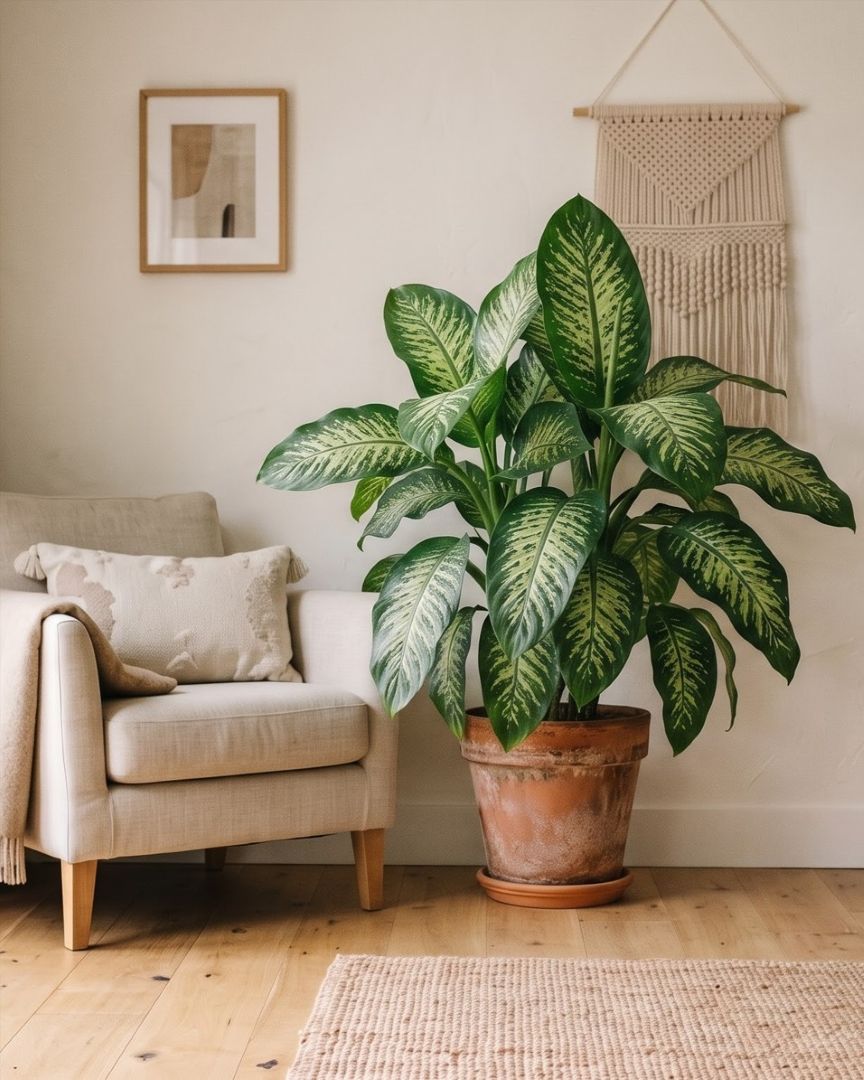
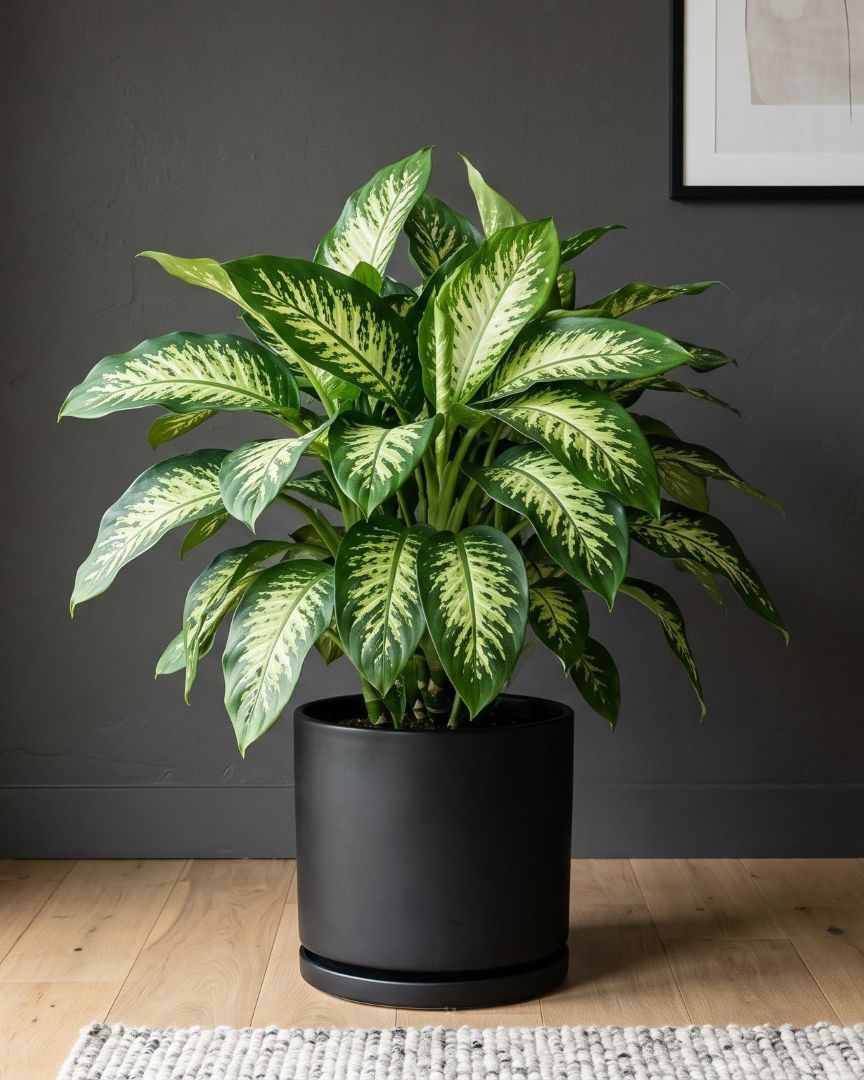
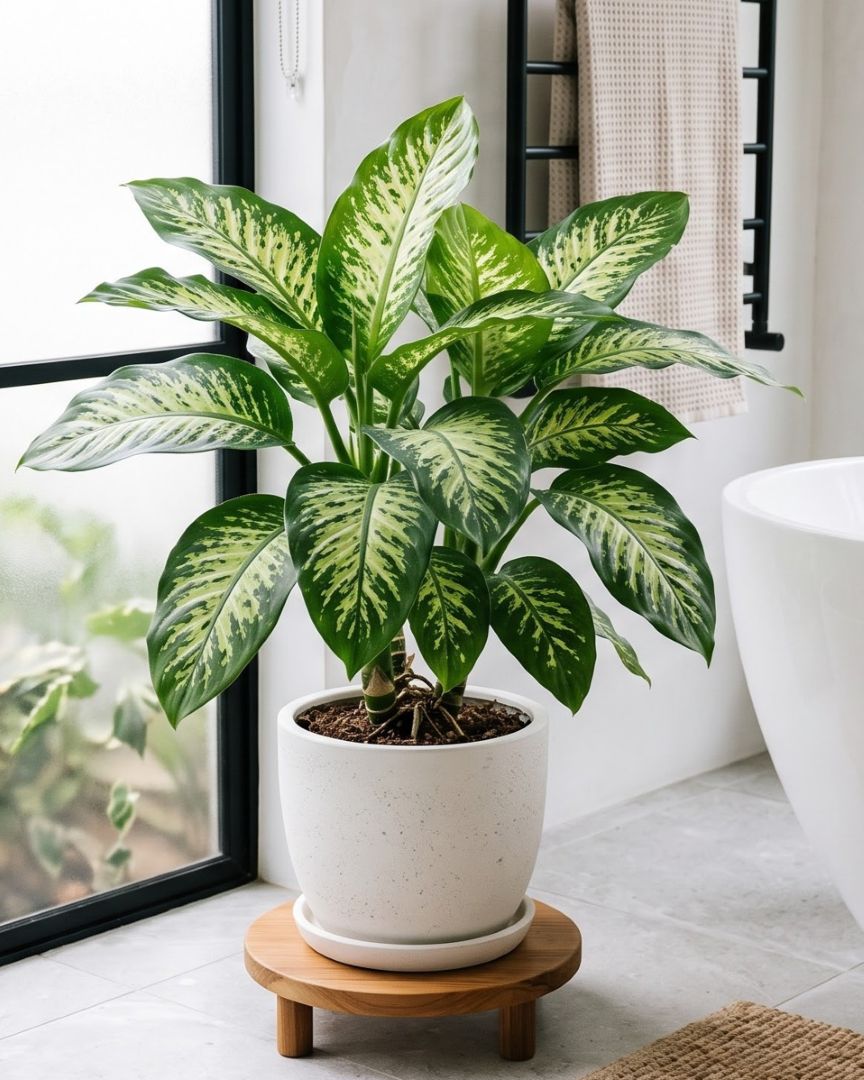
Troubleshooting Common Issues with Your Dieffenbachia seguine
Yellowing Leaves: The most common culprit is overwatering or poor drainage, which leads to root rot. Ensure you are letting the top inch or two of soil dry out before watering again.
Brown, Crispy Leaf Edges: This usually points to a lack of humidity or under-watering. It can also be a sign of salt buildup from hard tap water; try switching to distilled or filtered water.
Fading Variegation: If the vibrant cream and yellow patterns are turning solid green, the plant isn’t getting enough light. Move it to a brighter spot with indirect sunlight.
Drooping Foliage: Often a sign of temperature stress (being too cold) or extreme thirst. Check the soil moisture and ensure the plant is positioned away from drafty doors or AC vents.