Monstera deliciosa (Swiss Cheese Plant) Plant Features and Care Guide
The Monstera deliciosa, also known as the “Swiss Cheese Plant,” is a very popular house plant. Despite its dramatic and exotic appearance, it is very easy to grow.
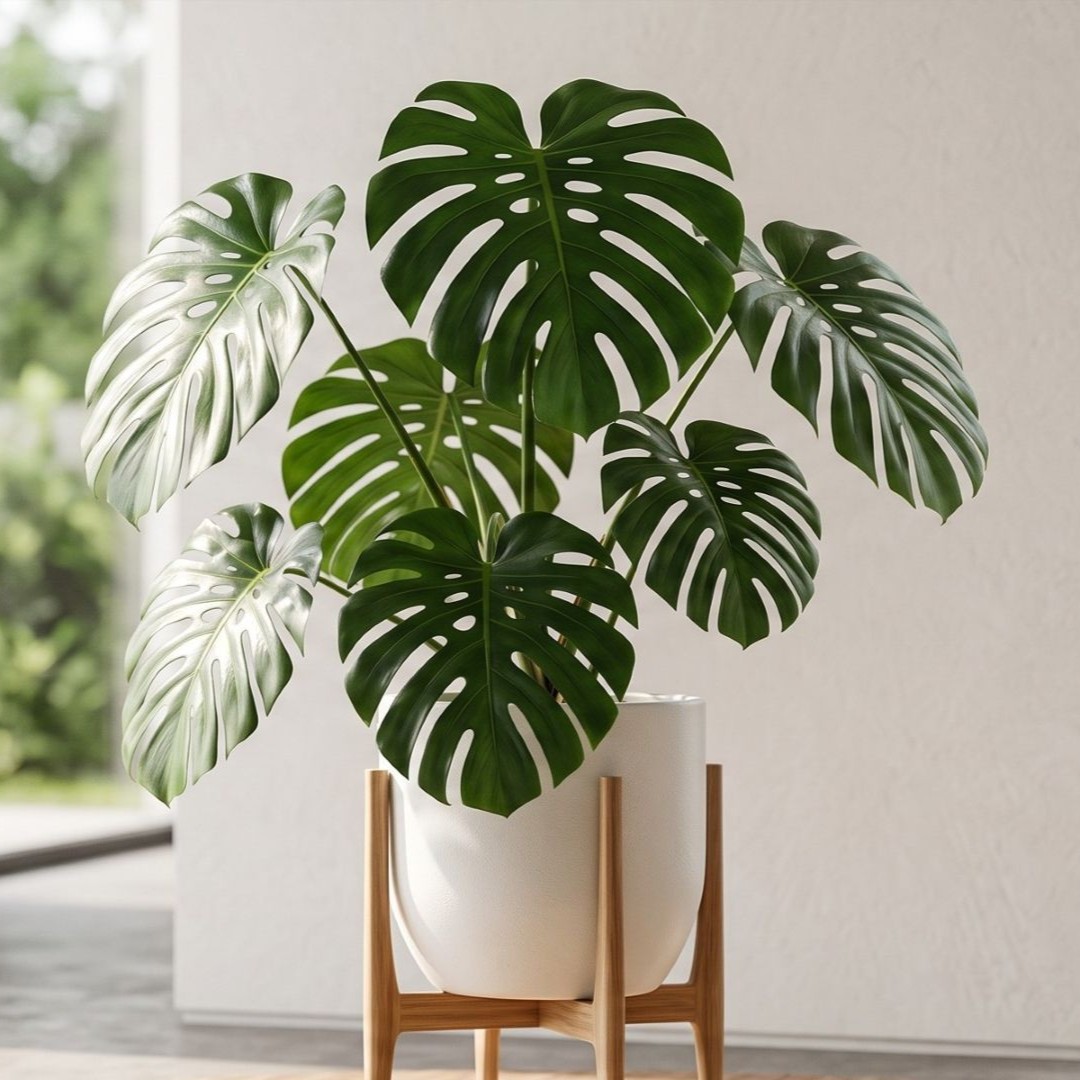
Monstera deliciosa Overview
Native to the lush, tropical rainforests of southern Mexico and Central America, this plant is a vining epiphyte. In the wild, it uses robust aerial roots to grab onto the trunks of larger trees, climbing upward toward the forest canopy to catch the sunlight.
Indoors, its defining feature is its large, glossy, deep-green leaves that develop deep splits and holes—known as fenestrations—as the plant matures. With good care, it grows into a huge, beautiful indoor plant.
Key Features of Monstera deliciosa
| Feature | Details |
|---|---|
| Botanical Name | Monstera deliciosa |
| Common Name | Swiss Cheese Plant, Split-Leaf Philodendron, Fruit Salad Plant, Mexican Breadfruit |
| Plant Type | Tropical evergreen epiphyte / vine |
| Mature Size | 10 to 15 feet tall indoors (can reach up to 60 feet in the wild) |
| Growth Habit | Climbing, vining, and spreading |
| Growth Rate | Fast (when provided with optimal warmth and light) |
| Leaf Appearance | Large, glossy, heart-shaped dark green leaves with deep cuts and perforations (fenestrations) |
| Toxicity | Toxic to humans, dogs, and cats |
CARE GUIDE
The Monstera is an easy plant for beginners. However, it grows best when you copy its natural rainforest home. Follow these steps to keep your Monstera healthy and green.

Light Requirement & Placement
A Monstera needs bright, indirect sunlight to grow its famous split leaves. While it can survive in lower light conditions, a lack of light will result in leggy growth, smaller leaves, and a lack of signature fenestrations. Avoid harsh, direct afternoon sun, which can scorch the foliage.

Water & Humidity
Water your Monstera thoroughly when the top 2 to 3 inches of the soil feel completely dry to the touch. It is generally better to underwater a Monstera than to overwater it, as it is highly susceptible to root rot. As a tropical native, this plant loves humidity. While standard household humidity (around 40%) is tolerable, boosting it to 60% or higher using a humidifier, pebble tray, or regular misting will encourage larger leaves and a faster growth rate.

Temperature
Keep your plant in a warm environment, ideally between 65°F and 85°F (18°C – 29°C). Monsteras are highly sensitive to the cold; they will stop growing if temperatures drop below 60°F (15°C) and can suffer permanent cellular damage if exposed to frost or freezing drafts. Keep them away from AC vents in the summer and drafty windows in the winter.

Soil & Nutrition
Plant your Monstera in a chunky, well-aerated, and fast-draining potting mix.
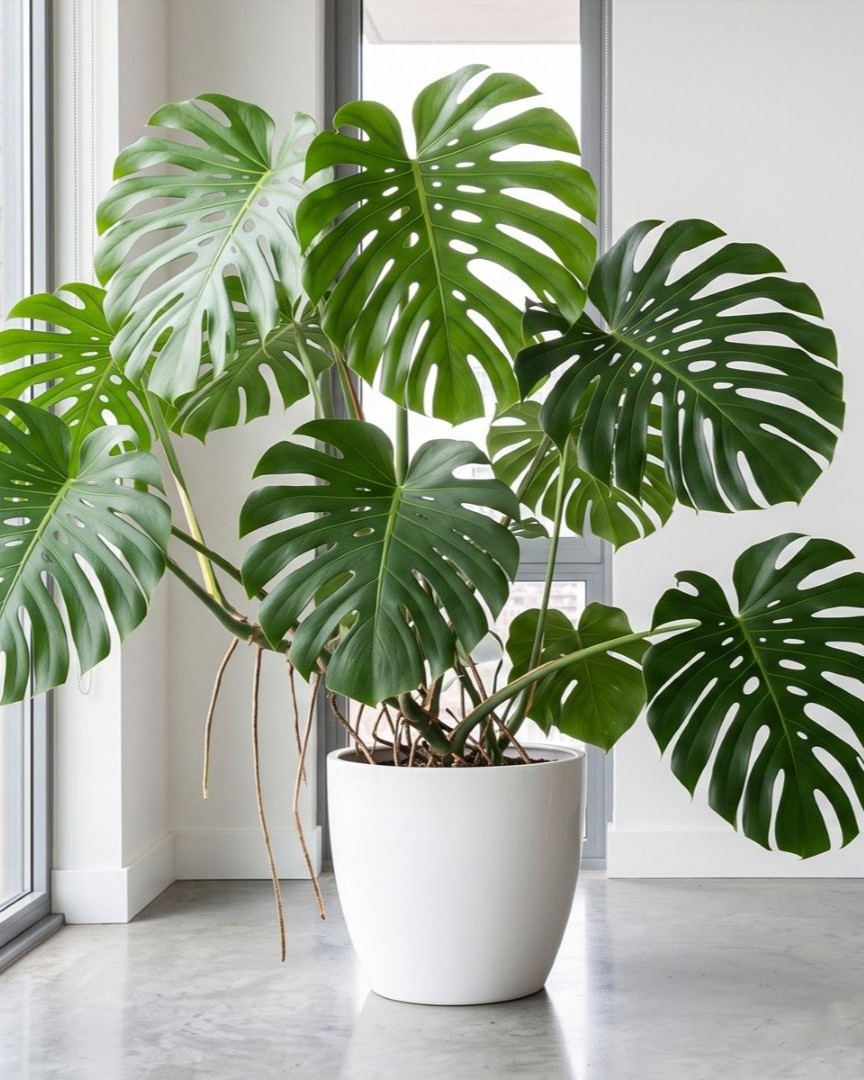
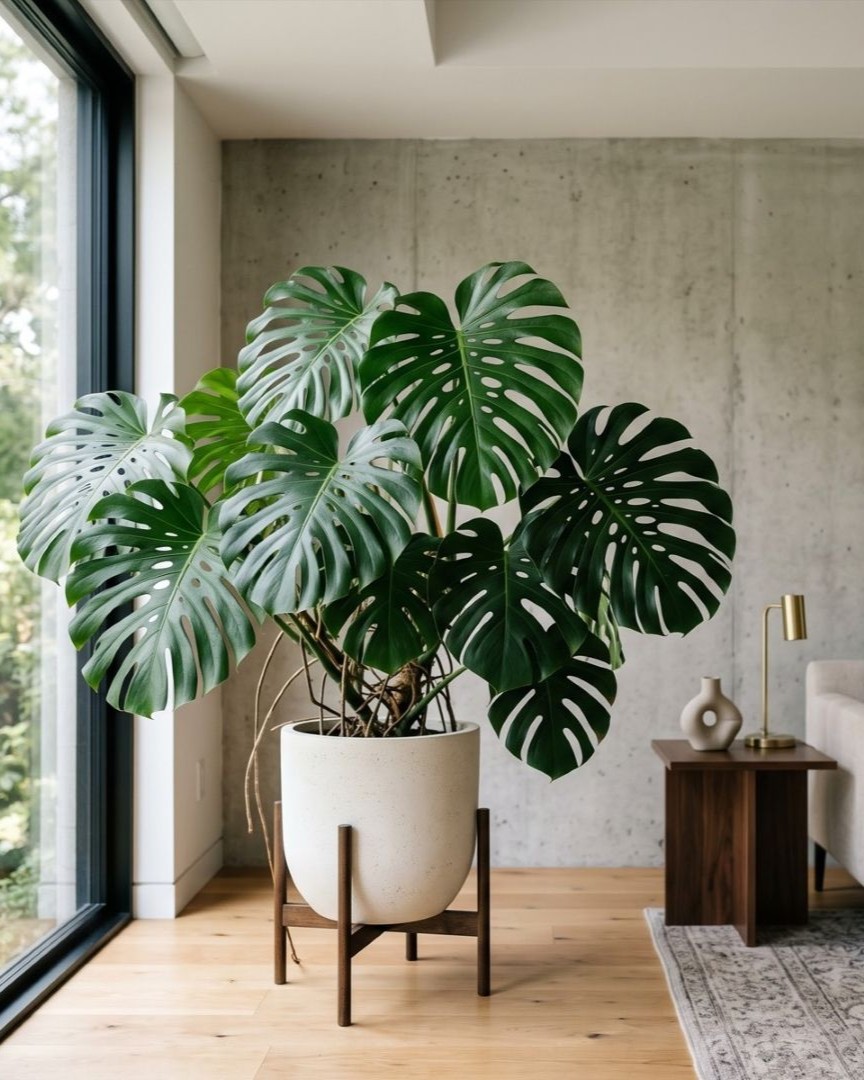
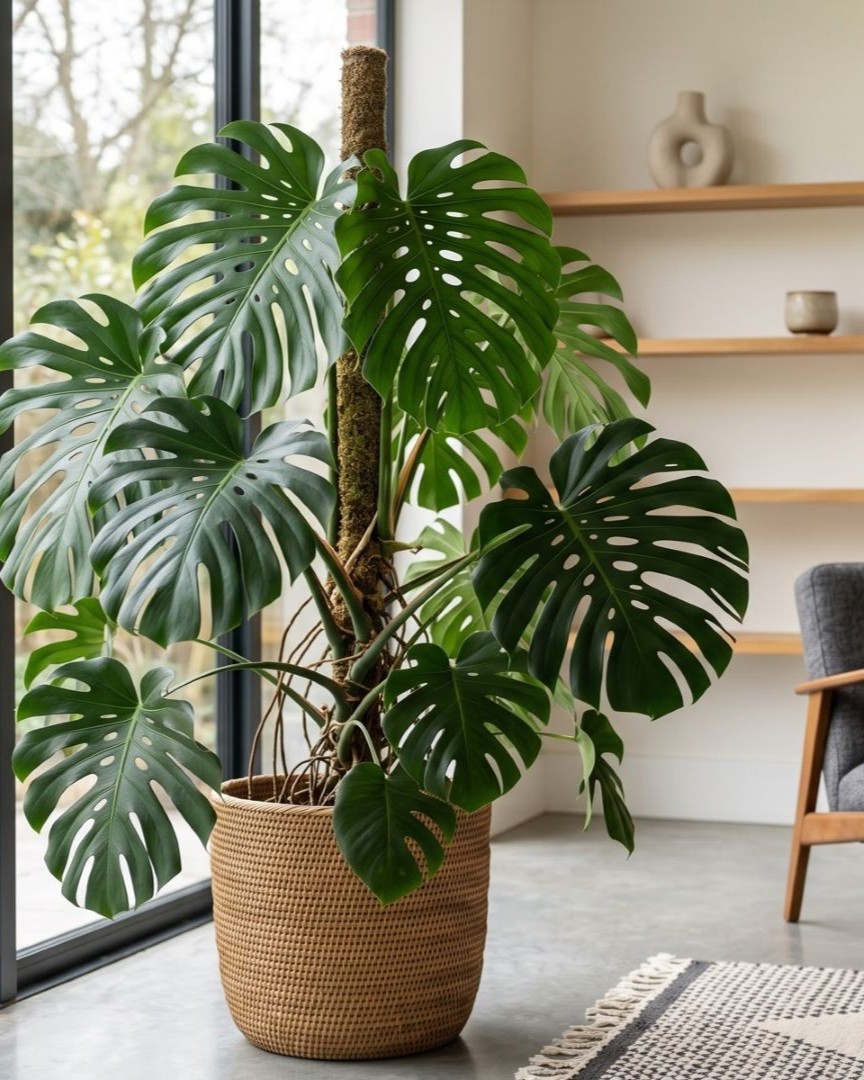
Styling With Monstera deliciosa
Troubleshooting Common Issues
Yellowing Leaves: If multiple leaves (especially the lower/older ones) are turning yellow and the soil is soggy, you are likely overwatering. Allow the soil to dry out completely before watering again, and check the roots for rot.
Crispy, Brown Leaf Edges: This usually points to a lack of humidity or severe underwatering. It can also be a sign of fertilizer burn if you have recently fed the plant a strong dose.
No Splits/Fenestrations: If your plant is mature but pushing out small, solid, heart-shaped leaves, it is simply not getting enough light. Move it closer to a window.
Drooping/Wilting: This can mean either extreme thirst or extreme root rot. Feel the soil—if it’s bone dry, give it a deep soak. If it’s soaking wet, the roots have suffocated, and you need to repot in fresh, dry soil immediately.